Last Night’s Relationship Circle – 7/22/14 Arlington, VA

hands

We had a fun and social evening at Piola. It was great to see some regulars and a bunch of new people. I keep forgetting, people want to meet people!

When we got to talking about reactions we have to each other’s behavior on dates (applicable to all situations), it got lively and very interesting. We looked at interpretations and frustrations that are very common and get in the way. But when we started looking at ways we can dissolve the effects of these reactions, by asking questions and finding out if we upset each other, by taking responsibility for the upset (which does not mean we were “wrong”), we create a safe and vulnerable environment for acceptance and for really allowing each other to get to know the real us behind the interpretation they (and we) may have created.

As human beings, we’re going to be challenging to figure out, to understand each other’s reactions and interpretations and if we can’t help but make a big deal out of them when they show up, be ready for some emotions and feelings that might make the person seem unsafe to us, or might make us feel like we messed up the experience or that we won’t get along. If we allow each other to just be human, perfectly imperfect, fashioned from a unique set of experiences and how we related to them, we see that just about everything we do makes sense.

Speaking of trying to make sense of things. A new member, Sam (our Buddha of the evening last night), suggested that we talk about expectations in relationships. First, I think it’s awesome that Sam took the initiative to suggest the meetup on the page and emailed me personally about it (YOU can do that, too)! Secondly, this is a great topic and I’m looking forward to the session. Right now, Sam and I are working out a date that works for him, but if you RSVP early, before we even have a date and time, it will indicate interest in the topic and of course I hope the date will eventually work for you, too.

RSVP HERE: http://www.meetup.com/The-Relationship-Circle/events/196592672/

Lastly, I just want to say thank you for becoming a part of a growing community of people interested in creating extraordinary relationships and learning about ourselves and growing in the process.

Love,
Gregg

How Death Can Be Inspiring

Today, The Relationship Circle is proud to introduce you to fellow life coach Brett Avelin. Brett is a warrior for love and healing and we are glad to have his voice here to share with you. You can learn more about Brett and his coaching practice here.
unnamed

Death is inspiring. There, I said it.
What, you say!?! Inspiring? Yes, inspiring.

Is there emotion in it? Yes.
Is there pain or grief or sense of loss in it? You bet.
So what does it inspire then?
A deep look at life and how we are living.

Death of someone close to us makes us reflect on what is truly valuable in our relationship to people, time and things.
It also inspires us to make changes that we would not have been moved to do otherwise.
Death inspires us to prioritize what really matters to us.

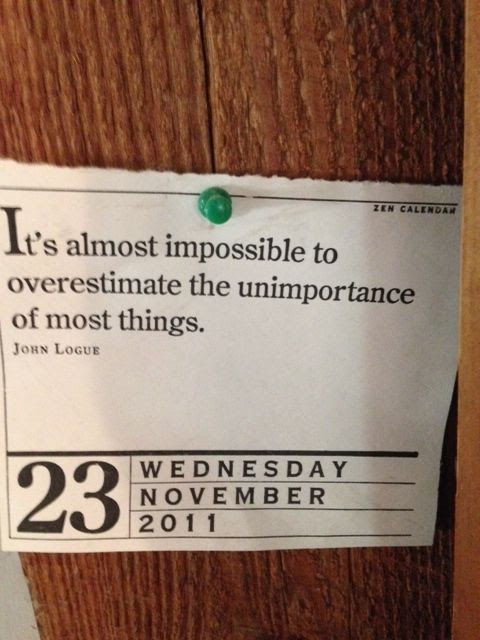
One of the reasons death inspires me is that it is such a great reminder of the impermanence of all things and relative unimportance of most things.

When I was a young boy riding reluctantly on a schoolbus and feeling scared and alone I was suddenly calmed and soothed by the idea that all this in front of me will pass sooner or later. I was able to accept my current circumstance better because of that thought.

Death is a face smacker.
It’s a wake up call in the highest order.
It allows very little pansy footing around what we actually dealing with here on planet delusion where we spend a lot of our time.

Planet delusion is absorbed in the day to day doings.
It keeps us on the surface talking about bubble gum things.

Inspiration arises naturally after the crap we have downloaded into our mind that clogs the central operating system has been cleared, deleted, or set aside.

To further expand on the possibilities that death can have us ponder I have listed below the five most common regrets from the book The Top 5 Regrets of the Dying, by Bronnie Ware, a palliative care nurse in Australia who routinely asked her patients about their regrets.

1. I wish I’d had the courage to live a life true to myself, not the life others expected of me.

How often have we all made choices that were based on someone else’s expectation or idea versus listening and trusting our own? Look at your relationship, your work, where you live and see if those are your actual choices or are you there because of someone else’s ideas about what’s best for you. Some will quickly defend this idea and say we would all be selfish clods if we lived how we actually wanted. Are we all really that afraid of our natural self and how it expresses? The closer we can come to living the life that is true for us, the happier we will be.

In watching my father in his last phase of life he was clearly living a life based on choice versus should or have to. Did everybody cheer for him and love that? Not necessarily. Was he living from what was true for him and happier for it? Absolutely as I see it.

2. I wish I hadn’t worked so hard.

Ware reported that she heard this from almost every single one of her male patients. All of the striving men out there for the big kill. All the hours, all the years putting in overtime for the hope of a better life or the golden retirement concept. Does it ever really pay off? Do you ever really get ‘there’?
I have made the choice since I was young to value time more than money. Some of this was born out of fear, but most of it comes from what is actually true for me.
Our time is precious here. How are you spending it?
With a few conscious changes your relationship to time can be a much more enjoyable one.
Are you spending your years toiling, striving, and grinding away?
Is it hard to you to figure out another way?
This area is something I wrote about a few weeks ago and is so pervasive today.

3. I wish I’d had the courage to express my feelings.

Feelings are what we live for, period.
Everything we want and everything we look to avoid is secretly driven by how we anticipate we will feel by doing so.
Expressing our feelings does not mean we are a hot mess walking around on two legs. It means having the courage to access and express how we are feeling. Living in a culture that lacks an emotional vocabulary let alone fluency makes us all feel like crazy people inside as we try to navigate a hidden world on the inside while appearing ‘ok’ on the outside.
What feelings do you have bottled up that are wanted to be expressed or simply felt?
This is an area where it is especially helpful to have a trusted ally because we can be so blind and disconnected from our bodies.

4. I wish I had stayed in touch with my friends.

Staying in touch with the people we FEEL (there’s that word again) connected to in life is a primary way of support that aspect that we are all going for. The trap in this is that we all tend to rely on these connections too much and lose the chance to claim our life on our own terms.
Is staying in touch with friends important to you? If so are you doing it? The years they do pass.

5. I wish that I had let myself be happier.

Notice the work ‘let’ here.
Happiness and inspiration are here for the allowing.
We don’t create happiness, it is here naturally when we let ourselves settle in to the situation that is in front of us.
There is ALWAYS something for our mind to be upset, worried, or treating as a problem. Even on all inclusive vacations you will see families squabbling away. You will always find something wrong, even in paradise.
I am allowing myself to be happy in regards to my dad’s passing because there are so many reasons that it was the right time for him to go.
Can you let yourself be happier?
Where could you allow yourself to be happier?

Live Large, this is your life.
Brett

Respect Relationships

holdinghandsMarriage and intimate relationships are extraordinarily challenging.
We are given few tools, if any.
We have few extraordinary examples of success.
We have almost no culture of feedback, evaluation and improvement like most institutions have.
We have love, we have attraction, we have expectations and we have hope and that’s about 5% of what you need to be successful.
Forgive yourself.
Forgive them.
Respect the nature of this endeavor.
You can give yourself and others the understanding that you have a lot to learn, that we’ve barely scratched the surface, whether we’ve been practicing for a year or 20.
You deserve a lot of credit for even trying.

Feelings (woah, woah, woah)

indexThe greatest tyrants of this world are not people.

They are feelings.

Feelings always win. Feelings are relentless.

If the feelings we relate to as negative don’t attach themselves to some action of destruction that you actually execute – of the competition, of your rival, of those we perceive that have hurt, disappointed or threatened us – they wage a war inside and win, because you are now the one trying to hold them back.

They steal your health, your vitality, your joy, your freedom, your life. Can you feel it right now as you read this?

This even happens with “positive” feelings. Joy and love not felt fully fight with us inside as well. We cut off those feelings all the time, fearful of feeling too good. Our fear of being hurt (again) comes up and often cuts them off. They want to happen, too. Can you feel the cut short love, joy and happiness inside of you?

You must be a worthy companion of your feelings and the feelings of others. They just want to be felt fully. They have a purpose, to flow freely and you can master them, you just need to be aware of their primary purpose and facilitate it. You absolutely do not need to attach any actions that hurt others to facilitate feelings. You just need to let them express themselves all the way to their end.

This is worth spending as much time and practice on as possible. Journal, put it into your workouts, vent to a trusted partner, scream into the pillow, break something you can afford to break, have a good cry, doodle the feelings, purposely put yourself in front of art that has you feel things. And understand that this is what other people need too and just let them have their feelings more often without correction. Try to keep from making agreements and taking words too seriously that are coming from emotion. Try to keep from fixing the person because you are uncomfortable with the feeling they are having. Try to keep from judging the person by the feeling. Their tyrants are running the show and will not be stopped! If they finish, the person will probably come back pretty soon

You Are Not Your Behavior (and neither is he/she)

I don’t remember where I first heard that, but when I did it started a powerful process of forgiveness and understanding that is still ongoing. At a certain point, when we are ready, we can finally see that the things we did that got us scolded, corrected, that bent others out of shape was not who we were and we ultimately were not being scolded, just our behavior, but neither us or the scolder could likely see that at the time. We can start looking objectively and releasing ourselves to the world from behind our common and habitual behaviors.

Our behavior so often meets others at their behavior. But because we run our lives without this distinction between our behavior and ourselves, we build narrow relationships, whole systems of punishment and ideas of identity that balance on this faulty evaluation.

People become related to and labeled as drug addicts, womanizers, criminals, self-centered, lazy, etc.. The person becomes synonymous with our mental or cognitive illnesses or issues as well. We are not very good at seeing the person behind the behavior, because we don’t want that behavior present in our lives, it makes us uncomfortable or threatens us. The best way to keep it out is to slap the label on and then fight the behavior or avoid it altogether. It’s also the best way to perpetuate the behavior, because that person’s sense of disconnection from others grows. For all of us who got the idea stuck in our heads that we were bad kids, do you remember how that label affected you? How it still might?

We defend our behavior as ourselves. Our parents did when we built up the umbrage to question them on their ways. Do you remember what it was like when you were in full swing of being critical of your parents? How right you were, how uncomfortable it was to see them keep doing or saying that thing? It may still drive you bananas. Their behavior was not them either. More often than not, their love for you met their fear for your safety and well being and that is just rarely a pretty place to come from and so largely misunderstood. The fear comes through most of all and we are impacted on a visceral level. We are either seduced or repulsed by each other’s fear. You have long-standing issues with them or other people in your life, but are you any more willing to disengage from your own behaviors and look objectively at whether they really work for you, your commitments and your relationships?

It’s a rare person who is willing to have their behavior questioned, rarer still to find someone willing to question their own without it being part of some old self-flagellation ritual (the bad kid). No one is really up for looking when it hits a place where the hurt that birthed these behaviors was so bad, so clear to the person either consciously or unconsciously (the hurt and the automatic behavior coming up without us even noticing it). The reaction, defending will always show up loudly and clearly. It takes powerful practice to keep going after self-defense kicks in and just look, without stopping from feeling made wrong or dominated.

See your heart open when you notice your pull to judge someone and you just allow that to pass and try to get present to the person. We’re judging all the time. You can try this on line for coffee, riding the subway, sitting down for a meeting, looking at photos of people you’ve heard of on magazines or the web, when your caller ID pops up and you know who’s calling. All of their behaviors that helped you form this judgment, all of the ways it worked or didn’t work with you and your reactions has us staying at this level of engagement with others, with ourselves. It scuttles the possibility of freedom from behaviors that reinforce pain, fear, disconnection, lack of intimacy, acts of violence. It keeps us chained to fear, to avoiding discomfort and to self-defense.

The stress benefits alone from not getting caught up in judgments and reactions is worth it. Try it and get back to me. It takes practice.

From love,
Gregg

Acclimation – A Powerhouse Relationship Skill

ford-marshburn-hadfield-google-hangoutOne of our greatest assets as human beings is our ability to acclimate. I was thinking about this and looked up an article about what it’s like to acclimate to gravity after months in space. Apparently, it’s no walk in the park.

Trusting your power to acclimate can make life drastically different. The thing is that when we’re talking about our lives and relationships, we need to be on purpose about using the power of acclimation.

Acclimating to feelings is a great place to start. Feelings unconsciously have us make decisions that may not serve us. If only we could acclimate to the feeling, we might take more decisive action towards our goals and interests.

I encourage you to practice acclimation on purpose. Look at an area of life where you could be more powerful, like asserting your leadership. If you understand that you will be acclimating to speaking up, for instance, over the next month, you can speak up as a practice and see how you are doing at making this a more normal part of your workday. As you acclimate, more of your power will come through and your fear will lessen.

You can do this with so many parts of life. Codependents who are looking for a change need to acclimate to not helping in ways that hurt them. If we want to wean ourselves from technology’s hold (or any addiction), we need to practice acclimation. Changing eating habits requires acclimation. All behaviors that we exhibit that we want to let go of, we need to acclimate to life without doing that thing (like cutting people off, half-listening, listening for forming your rebuttal, always voicing the most alarming possibility, pushing away from the unknown, etc.). When you remember that you have this power and practice it, you can broaden your horizons vastly.

Part of acclimation can include getting support. If you let people know what you are working on, they can hear you as a student and help you with feedback as you move from fear to comfort.

http://www.space.com/21290-space-station-astronauts-nasa-hangout.html

Your Awesomeness Does Not Require Agreement

If your will to be yourself, to express yourself authentically is affected by the sense of agreement you feel around you, then you have let your awesomeness become co-opted by your needs. Identify your needs and resolve that you can be responsible for them. Hello, we’re talking about awesomeness here, it’s worth it!

When you detach your awesomeness from your needs and attach them to your commitments and to the experience of life you want to create, your awesomeness can take on an eternal quality. You become bulletproof. With commitments, we get used to a lack of agreement. If there was total agreement, there would be no need for the commitment. Also, your awesomeness then is powerful, directed towards what matters to you.

By the way, your awesomeness can just be, too, without purpose, attached to nothing in particular other than just experiencing the joy of your inherent freedom (and we don’t need to even be aware of that!). We’re born with that freedom and with full on awesomeness. We train each other and ourselves out of it with our judgments and reactions and by giving those judgments and reactions so much weight (imagine sound effect of a jailhouse door slamming shut here).

The best use for lack of agreement is feedback. Maybe there’s something available in the lack of agreement that will make you more effective. Maybe it’s just a pile of crap that someone lazily wants to give you, too

Men Are Obsolete. So What?

Hanna Rosin is making a name for herself by being the one to trumpet “The End of Men”. She’s telling anyone who will listen something we already know, something that doesn’t get us anywhere.

What I’m interested in and what I talk to men and women about is what now? What incredible opportunities does the end of outdated stereotypes, expectations and needs (to provide, protect, to act aggressive, to dominate) create for both men and women and the world.

I’m more interested in the Evolution of Men and how great that can be for women as partners, as colleagues, for all of us and how we can take best advantage of everyone’s potential to contribute. How about you?

http://ideas.time.com/2014/01/02/men-are-obsolete/

Listening Skill

Our society has been listening very well for the next thing to make each other wrong (supported nicely by HuffPost, Jon Stewart, Drudge, TMZ and on and on…). We’re as good as we’re ever going to be at that. Is it helping us progress?

The skill we need to work on is just listening. Shhh, it’s right there…just…listen. The more deeply we listen, the more commonality we hear.